
November 3, 2025
Senior Care Cleaning: What to Look for in a Home ServiceFind the best cleaning service for seniors near me. Ensure safety, health, and independence for your loved one with expert home care.
Read Article
.svg)

Personal care services provide compassionate, non-medical help with everyday tasks so people can live safely, comfortably, and independently at home. This support preserves dignity while easing challenges related to aging, disability, illness, or recovery.
What Personal Care Services Include:
For families, personal care brings peace of mind—your loved one receives the right help at the right time.
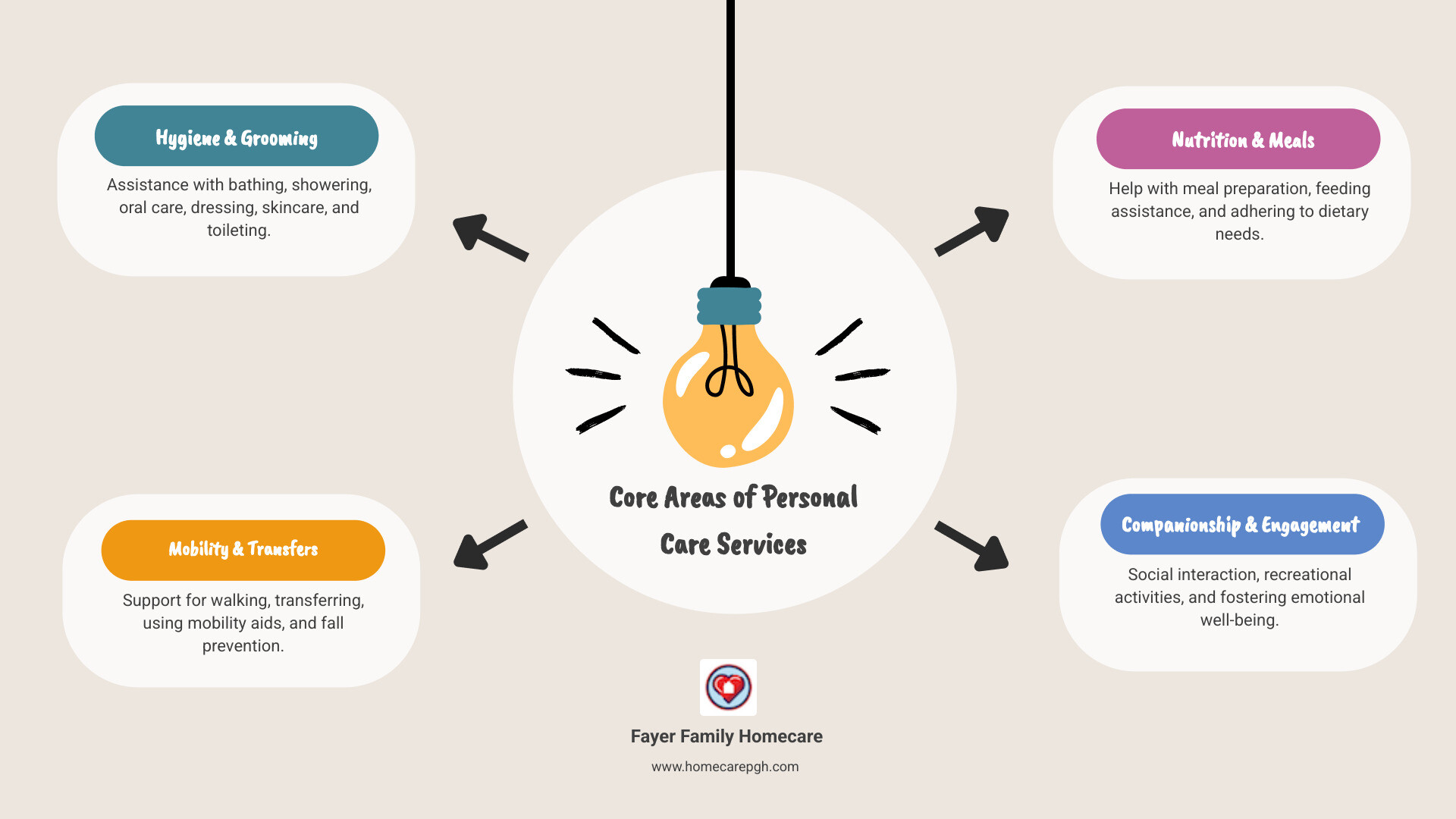
Personal care services offer non-medical help with Activities of Daily Living (ADLs) so people can remain safe and comfortable at home. The aim is to support, not replace, independence—especially for those choosing aging in place in the Greater Pittsburgh area.
Care is person-centered—custom to needs, preferences, and routines. Caregivers enable, rather than replace, what a person can do. Small choices (when to bathe, what to wear) protect autonomy and self-worth. Explore more in 5 ways home care services can help seniors stay independent.
Personal care services cover the day-to-day help that makes home life safe and comfortable. Care plans are personalized to fit existing routines.
Caregivers create calm, secure environments, use simple cues to encourage participation, and adapt as needs change. See our Personal Care Services for details.
High-quality personal care depends on compassionate caregivers and solid processes. At Fayer Family Homecare, we focus on safety, ethics, and personalized support. Learn more about working with a professional team: Why You Should Consider Hiring a Home Health Care Agency.
| Feature | Personal Care | Nursing Care |
|---|---|---|
| Type of Tasks | Non-medical ADL help (bathing, dressing, meals) | Clinical tasks (medications, wound care) |
| Provider | Caregivers/PCAs | RNs/LPNs |
| Goal | Independence, safety, quality of life | Manage medical conditions and recovery |
Personal care services provide non-medical support with ADLs so people can stay where they thrive most—home. They protect dignity while improving safety and comfort for those aging in place Pittsburgh.
Seniors, people with disabilities, those with chronic illness, post-surgery recovery, individuals with mobility challenges, and those living with dementia or Alzheimer's. See more about elder care in Pittsburgh.
Care is custom to preferences and routines—caregivers enable what a person can do and respectfully help with the rest. Small choices build confidence. Read 5 ways home care services can help seniors stay independent.
Our approach is simple: provide the help that’s needed, preserve what’s possible. Personalized plans fit naturally into daily routines.
We create safe spaces, use gentle prompts, and adapt care as needs evolve. Learn more on our Personal Care Services page.
Exceptional personal care is powered by dedicated caregivers and careful coordination. Employment in personal care occupations is projected to grow faster than average (2023–2033), reflecting the shift toward person-centered care. See: Why You Should Consider Hiring a Home Health Care Agency.
We learn preferences, identify risks, and build a living care plan—then review regularly so care stays aligned with changing needs.
Personal care supports daily living and companionship. Nursing care handles clinical tasks (medications, wound care). Both may work together based on needs.
Personal care services deliver non-medical support with ADLs that keeps you safe, comfortable, and independent at home. The goal is to complement your routine, not control it. Learn more about Aging in Place Pittsburgh.
Seniors, individuals with disabilities, people with chronic illnesses, post-surgery clients, those with mobility challenges, and people living with dementia/Alzheimer’s. See our Elder Care in Pittsburgh.
Care plans are custom to your preferences. Caregivers enable you to do what you can and assist where needed. More in 5 Ways Home Care Services Can Help Seniors Stay Independent.
Personalized care plans cover the essentials while respecting routines.
At Fayer Family Homecare, compassionate caregivers and strong systems drive exceptional personal care services. Demand for in-home care is growing quickly nationwide. Learn why partnering with an agency matters: Why You Should Consider Hiring a Home Health Care Agency.
PCAs follow personalized plans, communicate consistently, act with empathy, report changes early, and enable independence. Wage and outlook info: BLS data on care occupations.
We assess needs and preferences, involve family, identify risks, and keep plans current.
Personal care: ADLs, companionship, light household support. Nursing care: medical procedures and monitoring. Many families benefit from both.
Personal care services bridge the gap between needing help and staying independent at home. Support with ADLs—bathing, dressing, eating, safe movement—preserves dignity while prioritizing comfort.
Seniors, individuals with disabilities, those with chronic conditions, people recovering from surgery, and individuals with dementia or Alzheimer’s. Learn more about elder care in Pittsburgh.
Care is person-centered and flexible. Caregivers enable clients to do what they can and assist where needed—maintaining routines and control. More: 5 Ways Home Care Services Can Help Seniors Stay Independent.
Personal care plans are custom to each person’s routines and comfort.
Learn more: Personal Care Services.
Our caregivers and coordination processes put your loved one’s safety, dignity, and preferences first. Demand for skilled personal care is rising across the U.S. Considering home care? Read: Why You Should Consider Hiring a Home Health Care Agency.
PCAs follow your care plan, communicate clearly, act with empathy, report changes promptly, and support independence. Career outlook: BLS data on care occupations.
We begin with a thorough assessment, incorporate family insights, identify risks, and create a living plan that we review regularly.
Personal care: ADLs and companionship. Nursing care: medical tasks and monitoring. Many clients use both, depending on needs.
Personal care services provide a trusted hand with daily routines—so you can stay comfortable, safe, and independent at home in the Greater Pittsburgh area.
Seniors, people with disabilities, those with chronic illness, post-surgery patients, and individuals with dementia or Alzheimer’s. Explore aging in place.
A person-centered approach honors routines and choices. Caregivers step in only where needed, preserving control and self-worth. More insights: 5 Ways Home Care Services Can Help Seniors Stay Independent.
Custom plans deliver the right support at the right time.
More: Personal Care Services.
Exceptional personal care blends skilled caregivers with thoughtful coordination. Demand is growing quickly as more families choose in-home support. See: Why You Should Consider Hiring a Home Health Care Agency.
We learn the whole person, involve family, identify risks, personalize care, and review regularly.
| Feature | Personal Care | Nursing Care |
|---|---|---|
| Type of Tasks | Non-medical ADLs | Clinical procedures |
| Provider | Caregivers/PCAs | RNs/LPNs |
| Goal | Maintain independence | Manage medical needs |
Personal care services are compassionate, non-medical supports with ADLs that help people remain safe and independent at home—keeping beloved routines intact.
Seniors, people with disabilities, those with chronic conditions, post-surgery clients, individuals with mobility challenges, and people with dementia or Alzheimer’s. Learn more about elder care in Pittsburgh.
Care is custom to preferences. Caregivers enable participation and step in only where needed—preserving choice and control. See 5 Ways Home Care Services Can Help Seniors Stay Independent.
We customize care plans to fit daily life.
Learn more: Personal Care Services.
Our caregivers and care coordination keep clients safe, comfortable, and respected. Demand for home care is rising fast as more families value independence at home. Considering an agency? Read: Why You Should Consider Hiring a Home Health Care Agency.
PCAs honor preferences, communicate clearly, report changes promptly, and encourage independence—balancing help and autonomy. Career outlook: BLS data on care occupations.
We listen, assess needs and risks, involve family, and build living care plans that we review often.
Personal care supports daily comfort and routine; nursing care addresses medical needs. Many families use both, based on changing needs.
Personal care services help people maintain daily routines with dignity—supporting ADLs so they can remain at home among familiar comforts and community.
Seniors, individuals with disabilities, those managing chronic illness, people recovering from surgery, and individuals with dementia or Alzheimer’s. Explore resources for elder care in Pittsburgh.
We create person-centered plans that honor preferences and routines. Caregivers enable participation, offer help where needed, and protect autonomy. Learn more: 5 ways home care services can help seniors stay independent.
Care is comprehensive yet personalized, woven into daily life to ensure comfort and consistency.
Details: Personal Care Services.
Behind every great experience are skilled caregivers and thoughtful systems. Employment in personal care is projected to grow rapidly, reflecting families’ desire to keep loved ones independent at home. Read: Why You Should Consider Hiring a Home Health Care Agency.
We assess needs and preferences, involve family, identify risks, personalize the plan, and review regularly.
| Feature | Personal Care | Nursing Care |
|---|---|---|
| Type of Tasks | ADLs, companionship, light support | Medications, wound care, vital signs |
| Provider | PCAs/caregivers | RNs/LPNs |
| Focus | Independence and dignity | Clinical management |
At Fayer Family Homecare, we specialize in personal care that helps people live comfortably and confidently at home.

November 3, 2025
Senior Care Cleaning: What to Look for in a Home ServiceFind the best cleaning service for seniors near me. Ensure safety, health, and independence for your loved one with expert home care.
Read Article
September 3, 2025
Plan, Prep, Prosper: How to Master Your Weekly MealsMaster senior meal planning for better health & less stress. Get our 4-step guide to nutritious, easy meals today!
Read Article
August 10, 2026
Aging in Place Care: Growing Older at Home SafelyLearn how professional home care and safety modifications help aging in place safely for seniors in Pittsburgh.
Read Article